Go China

The Harvest is Ready

  • Go China
  • Home
  • Bring a Team
  • Explore & Learn
  • 4k Zones
  • ☏ Talk to us

April 17, 2017 by J R

Zibo 淄博市

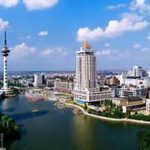
Zibo is considered as one of the birthplaces of the Han Chinese.

FIFA has recognized the city as the birthplace of football.

The city received the award of “Best 10 Harmonious Cities that enjoy Sustainable Development in China”

Zibo made significant contributions to the formation and prosperity of the Silk Road. Zibo was one of the biggest suppliers of silk products.

Mongols and Manchus are the only two minority groups that have more than 1,000 people.
Wikipedia

Google Maps


Filed Under: Han, Mixed

April 17, 2017 by J R

Nantong 南通

Nantong is a vital river port bordering Yancheng to the north, Taizhou to the west, Suzhou and Shanghai to the south across the river, and the East China Sea to the east. Its current population is 7,282,835 at the 2010 census.

In September 26, 2004, the first World Metropolitan Development Forum was held in Nantong. Although the city took a blow from the economic depression of the 1930s, as well as the Japanese occupation of the 1930s and 40s, Nantong has remained an important center for the textile industry. Because of its deep-water harbor and connections to inland navigational canals, it was one of 14 port cities opened to foreign investment in recent Chinese economic reforms.

Nantong has contributed to China’s educational development with several firsts: establishment of the first school for teacher training, the first folk museum, the first school for industrial textile manufacturing, the first school for embroidery, the first drama school, and the first school for the deaf and the blind.

Wikipedia

Google Maps


Filed Under: Han, Megacities, Mixed

April 3, 2017 by J R

Ningbo 宁波市

Ningbo is one of China’s oldest cities, with a history dating to the Hemudu culture in 4800 BC. Ningbo was known as a trade city on the silk road at least two thousand years ago, and then as a major port, along with Yangzhou and Guangzhou in the Tang Dynasty; thereafter, the major ports for foreign trade in the Song Dynasty.

It was a well known center of ocean-going commerce with the foreign world.[6] These merchants did not intermingle with native Chinese, practicing their own customs and religion and they inhabited ghettos.

Wikipedia

Google Maps

Filed Under: Han, Mixed

April 3, 2017 by J R

Shaoxing 绍兴市

Shaoxing is a prefecture-level city on the southern shore of Hangzhou Bay in eastern Zhejiang province, China. Located on the south bank of the Qiantang River estuary, it borders Ningbo to the east, Taizhou to the southeast, Jinhua to the southwest, and Hangzhou to the west. As of 2010, its population was 4,912,339 inhabitants. Among which, 1,914,683 (Keqiao and Yuecheng districts) lived in the built-up metropolitan area of Hangzhou-Shaoxing, with a total of 8,156,154 inhabitants.

Economically, the city’s driven by manufacturing of textiles, electronics, and energy-efficient lighting. Zhejiang has the fifth highest per capita GDP in the nation,

Wikipedia

Google Maps

Filed Under: Han, Mixed

  • « Previous Page
  • 1
  • 2
  • 3
  • 4
  • …
  • 15
  • Next Page »

Copyright © 2025 · Handcrafted with by ZindaMedia · Staff Email · Staff Login