Go China

The Harvest is Ready

  • Go China
  • Home
  • Bring a Team
  • Explore & Learn
  • 4k Zones
  • ☏ Talk to us

April 17, 2017 by J R

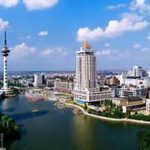
Nantong 南通

Nantong is a vital river port bordering Yancheng to the north, Taizhou to the west, Suzhou and Shanghai to the south across the river, and the East China Sea to the east. Its current population is 7,282,835 at the 2010 census.

In September 26, 2004, the first World Metropolitan Development Forum was held in Nantong. Although the city took a blow from the economic depression of the 1930s, as well as the Japanese occupation of the 1930s and 40s, Nantong has remained an important center for the textile industry. Because of its deep-water harbor and connections to inland navigational canals, it was one of 14 port cities opened to foreign investment in recent Chinese economic reforms.

Nantong has contributed to China’s educational development with several firsts: establishment of the first school for teacher training, the first folk museum, the first school for industrial textile manufacturing, the first school for embroidery, the first drama school, and the first school for the deaf and the blind.
Wikipedia

Google Maps


Filed Under: Han, Megacities, Mixed

January 30, 2017 by J R

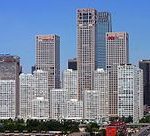
Beijing 北 京

A city combining both modern and traditional architecture, Beijing is an ever-changing megacity rich in history but also truly modern, exemplified in its extraordinary global influence in politics, business & economy, education, history, culture, language, sporting, architecture, fashion, art, entertainment, innovation and technology. Beijing is the second largest Chinese city by urban population after Shanghai and is the nation’s political, cultural, and educational centre.

Beijing has a total population of 21.148 million within the municipality, of which 18.251 million resided in urban districts or suburban townships and 2.897 million lived in rural villages. Within China, the city ranked second in urban population after Shanghai and the third in municipal population after Shanghai and Chongqing. Beijing also ranks among the most populous cities in the world, a distinction the city has held for much of the past 800 years, especially during the 15th to early 19th centuries when it was the largest city in the world.

Wikipedia | Google Maps

Filed Under: Capitals, Megacities

April 10, 2016 by J R

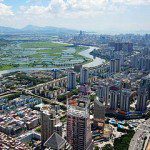
Shenzhen 深圳

Shenzhen is a major city in Guangdong Province, China. Situated immediately north of Hong Kong Special Administrative Region, the area became China’s first and one of the most successful Special Economic Zones SEZ) According to the Government report for 2014, Shenzhen had a population of 10,628,900 and a metropolitan area population of over 18 million.

Shenzhen is the largest migrant city in China. The population structure polarizes into two opposing extremes: intellectuals with a high level of education, and migrant workers with poor education.  It was reported that over 20 percent of P.R.C’s PhD’s worked in Shenzhen.

Wikipedia | Google Maps

Filed Under: Han, Megacities, Mixed

April 10, 2016 by J R

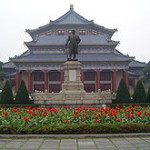
Guangzhou 广州

Guangzhou is one of the major birthplaces of China’s ancient “maritime Silk Road”. Located on the Pearl River, about 120 km (75 mi) north-northwest of Hong Kong and 145 km (90 mi) north of Macau, Guangzhou serves as an important national transportation hub and trading port. It is one of the fiveNational Central Cities.

Guangzhou is the third largest Chinese city, after Beijing and Shanghai, and the largest city in South Central China. In 2014 the city’s administrative area was estimated to have a population of 13,080,500.

Wikipedia | Google Maps

Filed Under: Buddhist, Capitals, Han, Megacities, Muslim

  • 1
  • 2
  • Next Page »

Copyright © 2025 · Handcrafted with by ZindaMedia · Staff Email · Staff Login