Go China

The Harvest is Ready

  • Go China
  • Home
  • Bring a Team
  • Explore & Learn
  • 4k Zones
  • ☏ Talk to us

April 13, 2016 by J R

Fuxin 阜新

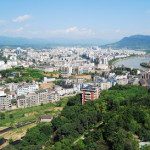
Fuxin is a prefecture-level city in northwestern Liaoning province. The total population of the prefecture at the 2010 census is 1,819,339. Fuxin is known as China’s ‘Agate City’, with 50{2a820490f75fc24b7a4835b35536182b9d21a7840194abd07e075ac351cf03fd} of the nation’s known deposits of the mineral being located there.

In Fuxin, there are 24 ethnic minorities including Mongolia, Hui and Xibe.
Wikipedia     Google Maps

Filed Under: Han, Mixed

April 13, 2016 by J R

Guangyuan 广元

Guangyuan  is a prefecture-level city inSichuan Province, China. It has a population of 2,484,123. Guangyuan’s economy is based on a diverse array of heavy industry, as well as mining and agriculture. It is an ancient city, notable for its relics and tombs. there was an earthquake in the city in 2008 and over 4000 people were killed.

Wikipedia     Google Maps

Filed Under: Mixed

April 12, 2016 by J R

Changchun 长春

Changchun is the capital and largest city of Jilin Province, located in the northeast of the China. Changchun has a total population of 7,674,439.

Known as China’s Automobile City, Changchun is an important industrial base with a particular focus on the automotive sector. It is also known as one of China’s Garden cities. There are many winter sports areas in and around the city

Wikipedia | Google Maps

Filed Under: Mixed

April 10, 2016 by J R

Shenzhen 深圳

Shenzhen is a major city in Guangdong Province, China. Situated immediately north of Hong Kong Special Administrative Region, the area became China’s first and one of the most successful Special Economic Zones SEZ) According to the Government report for 2014, Shenzhen had a population of 10,628,900 and a metropolitan area population of over 18 million.

Shenzhen is the largest migrant city in China. The population structure polarizes into two opposing extremes: intellectuals with a high level of education, and migrant workers with poor education.  It was reported that over 20 percent of P.R.C’s PhD’s worked in Shenzhen.

Wikipedia | Google Maps

Filed Under: Han, Megacities, Mixed

  • « Previous Page
  • 1
  • …
  • 5
  • 6
  • 7
  • 8
  • 9
  • …
  • 11
  • Next Page »

Copyright © 2025 · Handcrafted with by ZindaMedia · Staff Email · Staff Login