Go China

The Harvest is Ready

  • Go China
  • Home
  • Bring a Team
  • Explore & Learn
  • 4k Zones
  • ☏ Talk to us

January 30, 2017 by J R

Qiqihar 齊齊哈爾

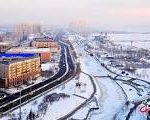
Qiqihar is a city in Heilongjiang Province. Qiqihar was founded as a walled city in 1691, and for a period the military government of Heilongjiang was based here. Qiqihar has a population of 882,364 making it the 2nd biggest city in Heilongjiang. There are mostly Han Chinese here but also some Mongolian, Manchu, and Daur peoples living in the city.
 

Wikipedia

Google Maps


Filed Under: Han, Tribal

April 21, 2016 by J R

Daqing 大庆

Daqing is a prefecture-level city in the west of Heilongjiang province, People’s Republic of China. The name literally means “Great Celebration”. Daqing is known as the Oil Capital of China, Its population was 2,904,532,  with a small population of other 31 minority ethnic groups including Manchu, Mongolian, Korean, and Hui nationalities.

Generated by the history of the city, Daqing has a culture centering around the Iron man spirit. It consists of patriotism, truth-seeking, entrepreneurial spirit and dedication.

Wikipedia     Google Maps


Filed Under: Han, Mixed, Tribal

April 21, 2016 by J R

Baotou 包头

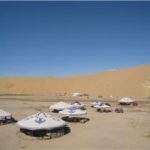
Baotou  is the largest industrial city in the Inner Mongolia Autonomous Region of northern China. Governed as aprefecture-level city, its built-up (or metro) area made up of 5 urban districts is home to 2,070,801 inhabitants with a total population  The city’s Mongolian name means “place with deer“.

The Mausoleum of Genghis Khan, 185 km (115 miles) south of Baotou City.The best way to experience Mongolian traditional customs is to ride a camel in the vast desert or grassland, visit or live in the Mongolian yurts, drink a bowl of hot milk tea, enjoy a meal of finger mutton, and listen to Mongolian folk songs. All these will get you closer to the life and culture of Mongolian herdsmen.

Wikipedia     Google Maps

Filed Under: Buddhist, Han, Tribal

April 21, 2016 by J R

Fuzhou 福州

Fuzhou is the capital and one of the largest cities in Fujian province, China. Along with the many counties of Ningde, those of Fuzhou are considered to constitute the Mindong (lit. East of Fujian) linguistic and cultural area.

Between 1405 and 1433, a fleet of the Ming Imperial navy under Admiral Zheng He sailed from Fuzhou to the Indian Ocean seven times; on three occasions the fleet landed on the east coast of Africa. Before the last sailing, Zheng erected a stele dedicated to the goddess Tian-Fei (Matsu) near the seaport.

Fuzhou was one of the most important Protestant mission fields in China. On January 2, 1846, the first Protestant missionary entered the city and set up a mission station.

Wikipedia     Google Maps

Filed Under: Capitals, Han, Mixed, Tribal

  • « Previous Page
  • 1
  • 2
  • 3
  • 4
  • 5
  • Next Page »

Copyright © 2025 · Handcrafted with by ZindaMedia · Staff Email · Staff Login