
Foshan (Chinese: 佛山) is a prefecture-level city in central Guangdong province, China. The area has an urban population of over 7.2 million. It is part of the Pearl River Delta Economic Zone with 44.78 million inhabitants. The main language is Cantonese but many Mandarin speaking migrants have moved into the area.
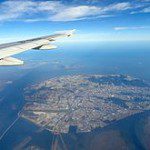
Xiamen 厦门
Xiamen also historically known as Amoy, is a major city on the southeast coast ofChina. It has a population of 3,531,347.
The city was a treaty port in the 19th century and one of the four original Special Economic Zones opened to foreign investment and trade when China began economic reforms in the early 1980s. It is endowed with educational and cultural institutions supported by the overseas Chinese diaspora. It has been ranked as China’s second “most suitable city for living”, as well as China’s “most romantic leisure city”

Baise 百色
Baise is located in western-northwestern Guangxi bordering Buyei and Miao Autonomous Prefecture (Guizhou) to the north, and Zhuang and Miao Autonomous Prefecture of Yunnan to the west. Baise’s population was 3,826,300. 80{2a820490f75fc24b7a4835b35536182b9d21a7840194abd07e075ac351cf03fd} of the people belong to the Zhuang ethnic group. The rest include Han,Yao, Miao, Hui,and other ethnic groups.
Baise has very beautiful natural scenery. Forested mountains harbor numerous species of plants and animals. The border areas are some of the least developed lands left in China. These features along with unique ethnic minority culture and important historical sites make it a growing tourist destination
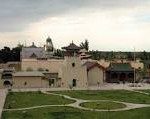
Hami 哈密
Hami (Kumul) is a prefecture-level city in easternXinjiang, People’s Republic of China. It is well known as the home of sweetHami melons.
It has a population of about 519,700 of which 68.4{2a820490f75fc24b7a4835b35536182b9d21a7840194abd07e075ac351cf03fd} were Han Chinese and 31.6{2a820490f75fc24b7a4835b35536182b9d21a7840194abd07e075ac351cf03fd} ethnic minorities-mostly Uyghurs, Kazakhs and Hui.
Hami by other names appeared on European maps in the 16th century, andMatteo Ricci in his account of the Portuguese Jesuit Benedict Goës visit to the city in 1605 used the an old spelling for the city.